

LET’S TALK: “African American Activism Began Long Before the 1960s”


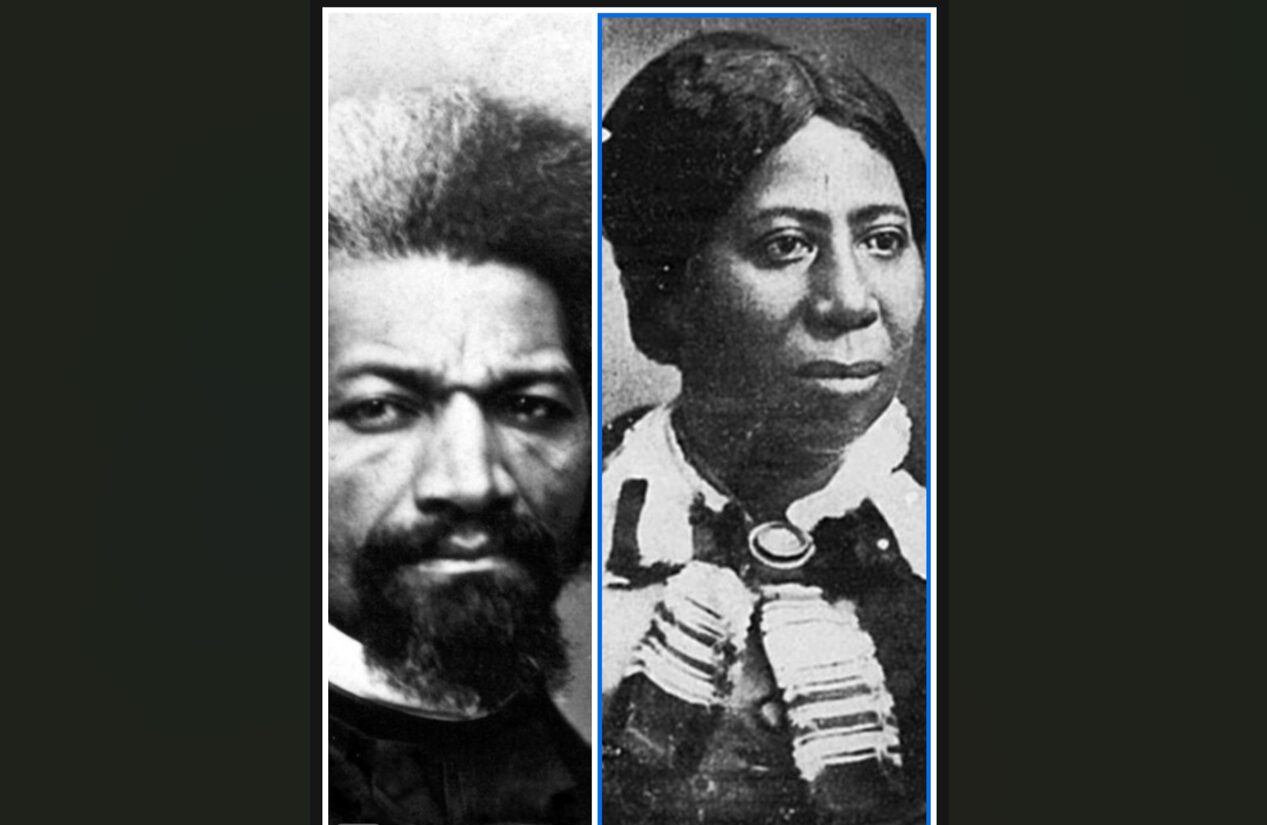
The legacy of African American activism did not begin in the 1960s, it reaches back as early as the 1800s with men and women like Frederick and Anna Murray Douglass.
Frederick Douglass was an escaped slave, while Anna Murray Douglass was born free. Frederick’s work focused not only on ending slavery, but also on education, economic opportunity, and political power. Anna, a member of the Underground Railroad, used their home as a headquarters, providing food and shelter for fugitive slaves on their journey to freedom in Canada. She was instrumental in helping Frederick escape slavery in 1838 by providing him with a sailor’s uniform and money. He later sent for her, and they were married that same year. Frederick, born Frederick Bailey, changed his last name to Douglass to avoid recapture.

Anna was a resourceful and determined young woman. By the age of 17, she had become a successful businesswoman, working as a seamstress, laundress, and housekeeper. She later learned shoemaking. Her steady income helped support the family, especially during times when Frederick’s earnings from speaking engagements were inconsistent.
The couple eventually settled in Boston, where Anna became a member of the Boston Female Anti-Slavery Society, an interracial organization that organized national women’s conventions. The organization was known for leading multistate petition campaigns challenging slavery, including efforts opposing the presence of enslaved individuals brought into free states.

Frederick Douglass went on to become one of the most prominent and powerful African American leaders in American history. Becoming an abolitionist, civil rights activist, powerful orator, and renowned author. He founded The North Star, one of the most influential anti-slavery newspapers of its time.
During the Civil War, he advised President Abraham Lincoln and helped recruit African American soldiers for the Union Army.
After the war, Douglass continued his service in several government roles, including the appointment of U.S. Minister Resident and Consul General to Haiti. In 1888, he became the first African American to receive a vote for President of the United States at a major party convention during the Republican National Convention. Douglass was a strong advocate for full citizenship, voting rights for African Americans, and the passage of the 13th, 14th, and 15th Amendments. He also supported women’s suffrage, believing in equal rights for all.
Together, Frederick and Anna Murray Douglass presented a powerful partnership, one visible on the public stage, and one working steadfastly behind the scenes. Both were essential to the movement.
Fredrick Douglass…. “Find out just what any people will quietly submit to, and you have the exact measure of injustice and wrong which will be imposed upon them.”
Their legacy reminds us that the fight for social justice is not a onetime event, but a lifelong pursuit for justice.


