

Sarasota Students Tackle Voting, Misinformation at CATA Forum
At Ringling College, high school and college students joined community members for candid conversations about civic engagement ahead of the 2026 midterms.
By Ed James III
Disclosure: James served as the event’s framing speaker.
SARASOTA, Fla. — Does your vote matter—and how can you make sense of the choices in front of you? That question brought high school and college students, along with community members, to Ringling College of Art and Design’s Goldstein Library on Sept. 26.
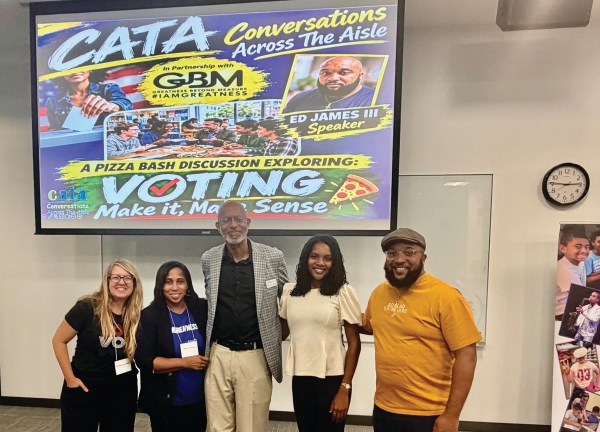
Conversations Across the Aisle (CATA) hosted “Why Vote? Make It Make Sense!” ahead of the 2026 midterm elections. The gathering brought Ringling College students together with high school students from Booker High School and Pine View School for an evening of discussion about voting, political skepticism and civic participation.
The event was organized by CATA founder Dr. Bill Woodson; Melanie Thomas of Ringling College and founder of Greatness Beyond Measure; and Nzinga Barnette, director of advocacy at the Tampa Bay Chamber. James served as the evening’s framing speaker.
Rather than talk about young people without including them, CATA gave students a chance to raise questions and discuss them with peers and community members. Dinner and short video clips opened the program, introducing arguments for voting as well as reasons some people are skeptical of the political process.


James then discussed why voting can feel confusing and where a single vote may have the greatest impact. Barnette and Woodson introduced CATA’s Principles for Navigating Challenging Conversations, setting expectations for respectful dialogue before participants joined table discussions led by trained facilitators.
Across seven tables, participants considered questions such as: Is choosing not to vote a form of protest—or a surrender of decision-making power? How much should a candidate’s identity shape the way they seek support? How can voters distinguish a candidate’s record from AI-generated misinformation and algorithm-driven outrage? And how do Sarasota County School Board elections shape decisions that affect students’ daily lives?
The conversations were candid and, at times, tense. Feedback gathered during the evening was described as overwhelmingly positive, with participants pointing to the value of having honest political discussions with people outside their usual circles. When the tables reported back, the range of views—from committed first-time voters to people skeptical of the political system—showed that the evening wasn’t about reaching one prescribed answer.
The forum also connected today’s conversations to a longer history of youth participation in elections. Ratified in 1971, the 26th Amendment lowered the voting age to 18 nationwide—a reminder that young people’s role in voting has itself been shaped by civic action.
Rachel Levey-Baker of Ringling Votes helped bring students into the room and introduce the program. Community sponsors also supported the event, recognizing the value of creating space for young Sarasota residents to talk with one another about civic life.
The 2026 general election is scheduled for November 3.
CATA’s forum did not tell participants how to vote. Instead, it gave them room to ask why voting matters, question what they hear and consider how to take part in decisions that affect their communities.

