

LET’S TALK: “Why Voting Is a Responsibility to the Next Generation”
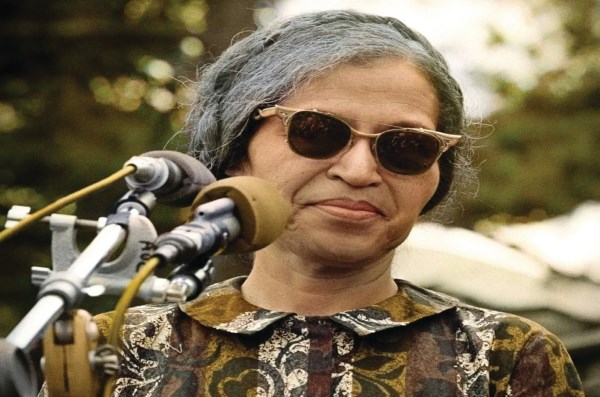
Rosa Parks voting rights legacy and responsibility to the next generation
By Judith Williams
Rosa Louise McCauley Parks was born on February 4, 1913, in Tuskegee, Alabama, to James McCauley, a carpenter and stonemason, and Leona Edwards McCauley, a schoolteacher. She grew up during the Jim Crow era, when racial segregation was enforced throughout much of the South and African Americans were routinely denied equal access to education, transportation, voting, and other basic rights.
Rosa learned at an early age that being African American meant she would not always be treated equally. Her mother placed a strong emphasis on education, but educational opportunities for African American children in Alabama were limited by segregation and inequality.
Rosa attended rural schools until the age of 11. Those segregated African American schools were severely underfunded, with no bus transportation, outdated books, and limited supplies and equipment. She later attended Montgomery Industrial School for Girls, Booker T. Washington Junior High, and the laboratory school at Alabama State Teachers College. Her early educational experiences helped shape her determination to challenge racial injustice. The Library of Congress confirms that Parks attended Montgomery Industrial School for Girls, completed ninth grade at Booker T. Washington Junior High, and attended Alabama State Teachers College through the 10th and 11th grades. (LOC)
In 1932, Rosa married Raymond Parks, a barber who was already active in the fight for racial justice. When they met, Raymond was involved in efforts to defend the Scottsboro Boys—nine young African American men who had been falsely accused of raping two white women in Alabama.
Rosa joined the Montgomery chapter of the NAACP in December 1943, when E. D. Nixon was president. While attending a chapter meeting at which she was the only woman present, Parks was recruited by Nixon to become the chapter’s secretary.
By the time of her arrest on December 1, 1955, for refusing to give up her seat on a bus, Parks was not an anonymous seamstress. She was an experienced NAACP organizer, and her arrest became the catalyst for a movement that had been building for years.
Along with capturing the attention of Dr. Martin Luther King Jr., Parks’ arrest prompted organizations such as Montgomery’s Women’s Political Council to mobilize quickly. The council helped produce and distribute tens of thousands of leaflets throughout Montgomery, encouraging African Americans to avoid the city’s buses.
December 5, 1955, marked the first day of the Montgomery Bus Boycott, which lasted 381 days. The National Park Service describes Parks’ arrest as the event that launched the boycott and identifies her resistance as part of a lifelong commitment to civil rights activism. (NPS)
Being an activist was costly. Rosa and Raymond Parks lost their jobs and received death threats. In 1957, they left Montgomery and moved to Detroit, Michigan.
The Civil Rights Movement challenged segregation in transportation, schools, housing, employment, public accommodations, and voting rights. Our elected officials make decisions involving our schools, neighborhoods, public safety, transportation, housing, economic opportunities, taxes, and civil rights.
Your vote counts.
Rosa Parks faced racial barriers when she tried to register to vote. She was denied the right to vote on at least two occasions because of her race and later worked with voter-registration efforts. (LOC)
Her life reflects the impact ordinary citizens can have on society when they organize around a specific injustice and refuse to give up until change occurs.
Our vote helps determine what kind of community our children and grandchildren will inherit.


