

Understanding Tariffs-Taxes, Cooperative Economics, and Community Power
There is often confusion about the meaning and impact of tariffs. A tariff is a tax placed on goods entering the United States. When a U.S. president imposes a tariff on goods from another country, such as Canada, the cost of that tariff is paid by U.S. businesses importing those goods, not by the foreign country itself. When American businesses order supplies from abroad, the business pays the tax, and that added cost is frequently passed on to consumers through higher prices.
The United States relies heavily on imported goods, including energy from Canada, manufactured products, machinery, electronics, vehicles, oil, pharmaceuticals, and consumer goods. As tariffs increasingly shape U.S. trade policy, their effects will be felt across communities nationwide. This economic reality challenges us to reflect on who we are as a nation and how we respond collectively to changing conditions.
Each December, the Friends of the Betty J. Johnson North Sarasota Public Library and its African American Cultural Resource Center sponsor a seven-day Kwanzaa celebration rooted in African traditions developed in the United States. One of the principles observed during Kwanzaa is Ujamaa— Cooperative Economics.
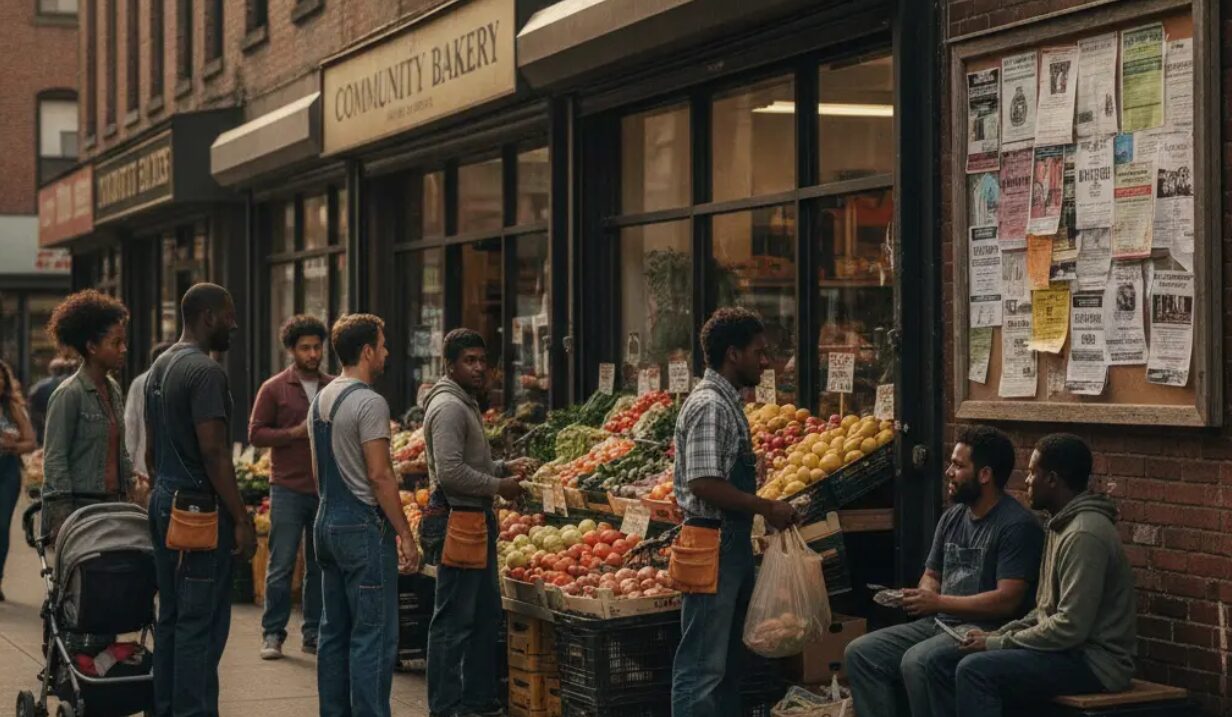
On December 29, 2025, as part of the Ujamaa observance, a documentary film directed by Judith Williams, highlighted small businesses within the community. When Africans were brought to America through enslavement, they carried with them cultural traditions and survival practices, including cooperative living. Enslaved communities shared food, clothing, labor, and care as a means of survival and resilience. Although the full impact of tariffs may not yet be felt in all communities, revisiting the practice of learning and working together, supporting one another, and strengthening local economies, can be a powerful strategy for sustainability.
Today, our communities are far more diverse and educated than they were a century ago. We have individuals trained in agriculture, science, the arts, technology, and emerging fields such as artificial intelligence. This raises important questions: What can we do locally to help our communities grow and remain sustainable despite decisions made beyond our control? What assets exist within the Manasota region that we can support and build upon? How can we help small businesses and nonprofit organizations? What groups can we join, or what movements can we create to support our communities?
Civic engagement is also essential. In 2026, elections will once again shape the direction of our nation. Voting is one of the most powerful tools available to communities. Registering to vote, learning about the candidates, understanding the voting process, and participating in elections ensure that our voice is heard.
Power lies within the community, a community strengthened by cooperative economics and exercising the right to vote.


